Knowledge Hub
What Ecommerce SEO Gets Your Store (And How To Tell It Is Paying)
By John Butterworth · October 1, 2026
You pay a platform for every visitor an ad sends, and you pay once for the work that gets a page ranking. That difference is where the benefits of ecommerce SEO start: each order a ranking page takes afterwards lowers what that work cost you per sale. Buyers who typed what you sell, a store that's easier to buy from and free product listings come from the same work.
I'm John Butterworth. Whether to keep paying Google and Meta for every visitor or move part of that budget into search is the decision I help store owners make. I help them make it for Shopify and WooCommerce stores, working from Manchester at an agency that does SEO only for ecommerce stores.
You can check two of these benefits yourself with Google's search reports, your analytics and your ad dashboards. If you'd rather hand that over, get a free SEO audit of your store and we'll tell you which benefits you're already collecting.
Ranking Earns Your Store Cheaper Sales From Shoppers Already Searching
A Matching Category Page Meets Shoppers Who Already Want To Buy
Search sends a visitor who has already chosen, and that's the first of the benefits of ecommerce SEO. Someone typing 'oak bedside table with drawer' has picked the product before they search, and Google hands that visit to whichever page uses those words. If it's your category page, you get a buyer comparing options inside your range.
That's why I put a store's SEO budget into category and product pages before the blog.
In the store audits I run, the collection page is usually what stops this benefit arriving: a title copied from the menu and no copy, so Google has nothing to match. I've set out the fix in category pages that rank for buying searches.
Each Organic Order Costs Less The Longer A Page Ranks
You pay once for the SEO work on a page, such as its copy and internal links. Each order the page earns afterwards takes a smaller share of that cost.
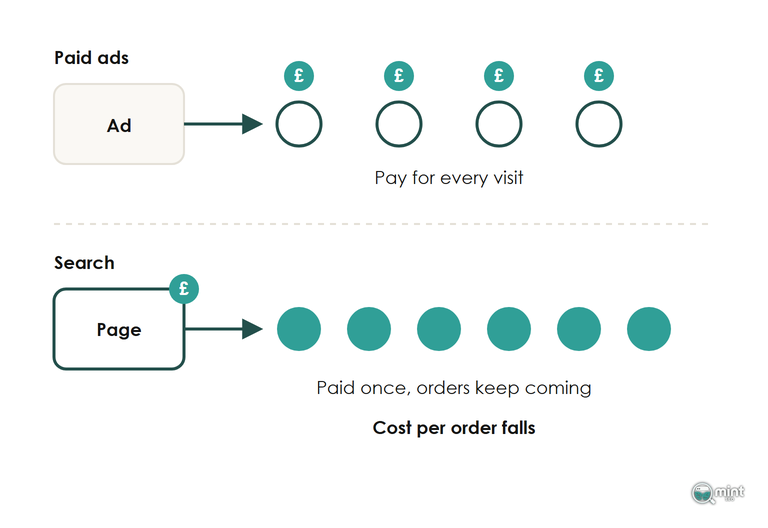
Paid ads work the other way. You pay for every visit at a price set at auction, and WordStream's Google Ads benchmarks, updated in May 2026, put the average cost per click at $5.26 after a 12.88% rise in a year.
Paid search still converts well, so compare the two on cost per order over the life of a page.
In the first months an ad wins, because the page hasn't ranked yet. Once it ranks, the ad's cost per order stays wherever the auction puts it while the page's keeps falling.
Search Work That Lifts Rankings Also Lifts Conversions
A category structure shoppers can follow and product copy that answers the buyer's question are what search engines reward, and faster templates help at the margin. All three also stop a shopper leaving without buying.
I fix a slow store for the sales first and the rankings second. A slow page loses sales on every visit, while its effect on rankings is small.
So count this benefit in your conversion rate across every channel you pay for. A product page rewritten for search also works harder on the visitors you buy through Google Ads and email. If speed is where your store falls down, start with how to speed up a slow Shopify store.
A Search Customer Carries No Fee A Platform Can Raise
Every customer you buy through ads or a marketplace comes at a price and on terms the platform sets, and the platform can change either without asking you.
Google showed this in September 2026, when it began moving Search campaigns that use the campaign-level broad match setting into AI Max automatically. Amazon's latest fee update added an average of $0.08 to the FBA fee on every unit sold from 15th January 2026.
Google changes its rankings too, and a core update can move a page down. What it can't do is charge you for the visit, so the cost of a search customer stays yours to manage.
Products Reach Google Shopping Results Without A Bid
A bedside table in your feed can turn up as a free listing when someone searches Google Images or points Lens at a similar one, as well as in Search and the Shopping tab. Google builds those listings from your feed and charges nothing when they're clicked.
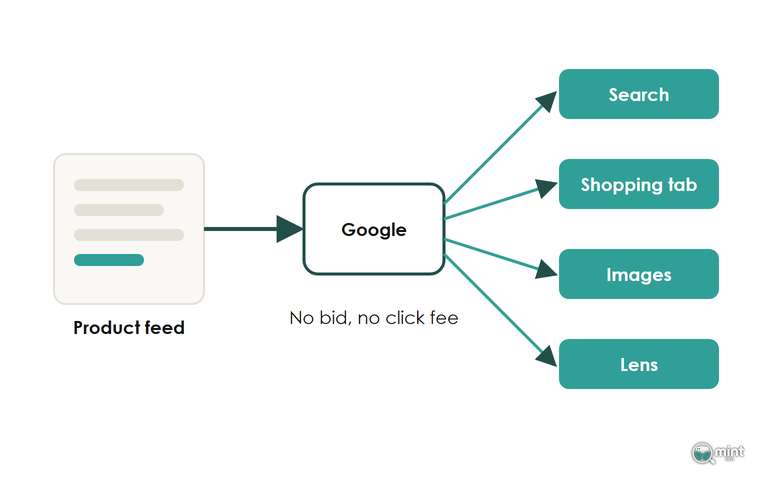
Feed titles and attributes decide which shopping searches a product can show for, separately from the product page itself. We rewrite feed titles to carry the words shoppers search, the same way we rewrite page titles.
AI shopping answers narrow these listings too, as the section on AI search shows. The feed work is the same either way, and our guide to the ecommerce product feed sets out which attributes to fill first.
Two Numbers Show Whether The Benefits Are Paying Off
The first number is your cost per organic order, the second is the traffic your free listings send. Judge both from one core update to the next, because that's when most stores see rankings move. The non-brand split, and how to pull it from Google's search reports, is set out in our ecommerce SEO strategy guide.
Cost Per Organic Order Shows Whether Search Is Beating Your Ads
Add up what you spend on SEO in a quarter and divide it by the orders that came from non-branded organic search. Branded orders would have arrived anyway, so leaving them out stops the figure flattering the work.
Set the result against the cost per acquisition your Google Ads and Meta dashboards show for the same quarter, and re-run the sum every quarter, reading the trend from one core update to the next.
Before you believe a jump in organic orders or organic revenue, open Shopify's referrer report and its marketing attribution report side by side. If only one of them shows the rise, the attribution rules made it.
When we ran a seasonal campaign for BedShelfie, we applied that check before reporting anything: its sales from Google Search grew 256% from July to September 2025 against July to September 2024, and the two reports agreed. Had only one shown the rise, I'd have treated the figure as a quirk of that report. That figure covers all Google Search sales, branded included, so for your own sum split out the non-branded orders first.
GA4 Reports Free Listing Visits As Their Own Source
Turn on auto-tagging in your Google merchant account, and GA4 will report visits from free product listings under their own source platform, labelled Shopping free listings.
That separates the shopping benefit from ordinary organic clicks, so you can see what the feed work brings in. I'd check those visits against the merchant account's own performance report before relying on them.
AI Shopping Answers Narrow The SEO Payoff To Stores Google Trusts
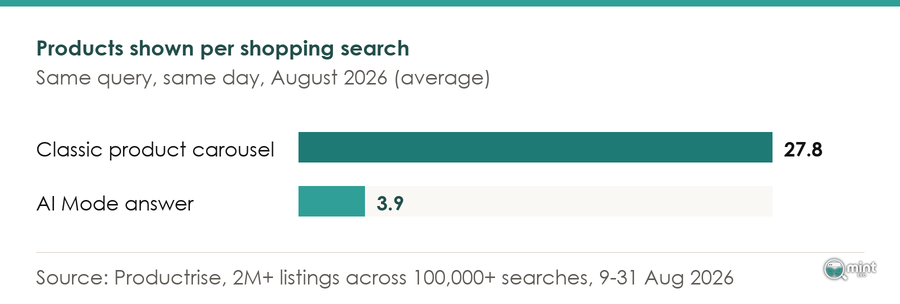
AI search has narrowed which stores collect the benefits of ecommerce SEO on product searches. Google's AI Mode shows a handful of products where the classic results show dozens. On 1st September 2026, Productrise's AI Mode study reported 3.9 products on average in AI Mode against 27.8 in the classic product carousel. Of the products in the carousel, just 1.28% also showed up in AI Mode when the identical query ran that day.
Buying searches are where AI Overviews are pulling back. Between November 2025 and April 2026, Semrush's study of more than 600,000 keywords found the share of transactional results carrying an AI Overview fell 5%. Research-stage commercial searches gained them over the same months, so category and product pages still meet ready-to-buy shoppers in the classic results.
AI Mode picks products it has evidence for: complete feed data, reviews on the product page, and mentions of the store on the pages it already cites. Fill in every product attribute and collect reviews, then get the store mentioned on those cited pages, which is how getting cited in AI answers works for a store.
Google's merchant tools now include an AI performance insights report that shows your share of voice in AI Mode and AI Overviews, plus an attribute completeness score listing the products missing the details shoppers filter on.
Find Out Which Of These Benefits Your Store Is Missing
Stores I audit usually collect one or two of these benefits and miss the rest. In most of those audits a feed nobody has touched since the app created it is still sending bare product names. Across my career I've driven 3M+ organic sessions for stores.
We check your store against each benefit above. That means the buying searches your category and product pages could win and the speed your templates cost you, then how your feed titles read to Google and whether your reporting can produce a cost per organic order. The fixes come back in priority order, with the quick wins first and the reason for each.
Get a free SEO audit of your store to see which benefits you're leaving behind.

About the author
John Butterworth
John Butterworth is the founder of Mint SEO, a Manchester ecommerce SEO agency he started in 2024. He has 11 years in SEO and digital marketing, previously running SEO departments for market-leading brands and several agencies. He specialises in Shopify and ecommerce SEO, and his work has ranked over 100 websites and driven more than 3 million organic visits. He speaks at industry events including the SEO Mastery Summit.
Connect on LinkedIn →