
Knowledge Hub
Which Ecommerce Platform Ranks Best (And The Add-Ons That Hold A Store Back)
By John Butterworth · September 29, 2026
For a store that wants organic search to pay, my ranking puts Shopify first, because Shopify runs the storefront code and keeps it fast without a developer. On any best ecommerce SEO platform list I'd write, WooCommerce comes second and matches it once someone on your team owns the hosting and plugins. Wix and Squarespace come last, because their stores rarely earn organic traffic.
If you're weighing a replatform because traffic has stalled, the platform is often the smaller part of the problem. I rank the five on what changes rankings between them, then give you a quick check of your own add-ons before you blame the code underneath.
I'm John Butterworth, and this ranking comes from the stores I work on. Most of my clients at Mint SEO, the ecommerce SEO agency I run in Manchester, trade on Shopify. For a store that wants search to be a main channel, I recommend Shopify or WooCommerce.
Judge An Ecommerce Platform On Code, Bloat And How Much You Can Change
Every mainstream ecommerce platform gives you editable title tags, meta descriptions, an XML sitemap and canonical tags. Since every platform has them, a feature checklist can't tell you which is the best ecommerce SEO platform. Three things decide how well a store ranks on each one, and I weigh them in this order.
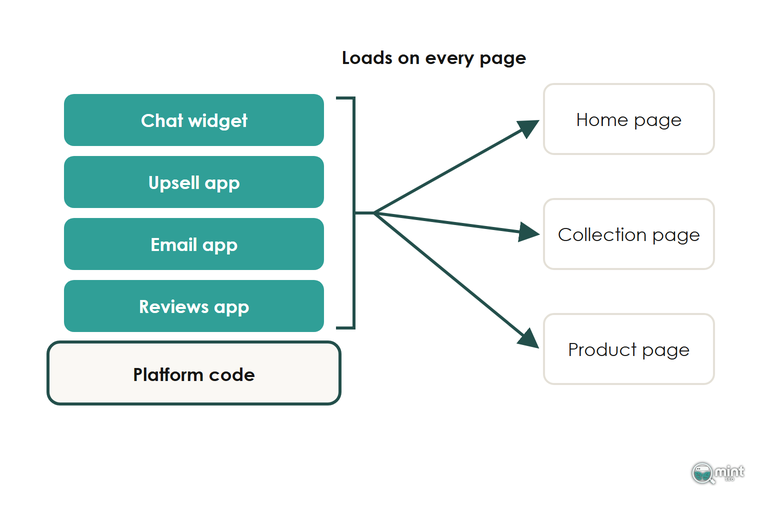
- Codebase: who hosts and runs the code Google crawls and times. A hosted platform tunes one stack for every store, so its page speed starts high on Google's Core Web Vitals measures.
- Bloat: the add-ons a store tends to pile on. Each app, plugin or widget adds code that Google has to download before it can render and rank the page.
- Control: whether you can change the URL structure and the robots.txt file when a fix needs it. Templates and structured data matter here too.
In my 11+ years of SEO for online stores, the ranking problems I trace to add-ons outnumber the ones I trace to the platform underneath them. Codebase still comes first, because a slow store loses sales long before speed costs it rankings, and the codebase sets the speed floor every page loads from.
Shopify First, Then WooCommerce, BigCommerce, Adobe Commerce And The Builders
My best ecommerce SEO platform order below comes from those three criteria, with the one criterion that decides each platform's place set out next to its name.
- 1. Shopify, for hosted code that starts fast.
- 2. WooCommerce, for full control of URLs and markup.
- 3. BigCommerce, for custom URL rules on hosted code.
- 4. Adobe Commerce, for the deepest control.
- 5. Wix and Squarespace, which rarely earn organic traffic.
Shopify Ranks Best For Most Stores Because It Runs The Code For You
Shopify ranks first because it hosts and tunes the code Google crawls, so a store without a developer starts on a fast base. Its fixed URL folders apply to every Shopify store, including the ones outranking you, and our comparison of Shopify with its alternatives covers the rest.
WooCommerce Speed And Security Depend On The Plugins You Choose
A WooCommerce store that's run well ranks as well as any Shopify store. WordPress gives you full control of URLs, templates and structured data, with nothing between your developer and the code.
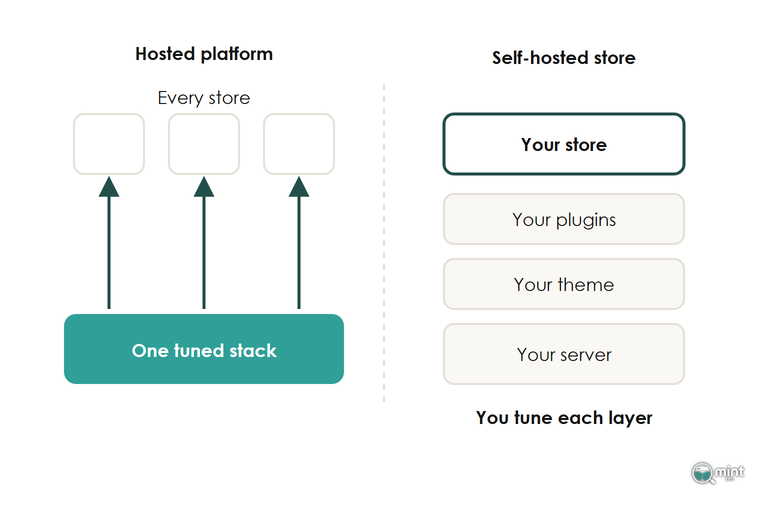
It sits second because the codebase is your job: you choose the host, the theme and every plugin, and your store's speed and security follow those choices. The plugins are where I'd look first. They made up 91% of the WordPress vulnerabilities in Patchstack's 2026 security report, against just six flaws in WordPress core.
On a WooCommerce store, my first check on every plugin is whether core now does its job, because core keeps absorbing work that used to need an extension. Version 11.1, released in September 2026, made variation image galleries native and switched off the old Additional Variation Images extension on update. That's one fewer plugin to load and patch.
BigCommerce Lets You Set Your Own URL Structure
BigCommerce is hosted like Shopify and gives you the URL control Shopify won't. I rate it for dropping the fixed product folder: its short URL format puts each product at yourdomain.com/product-name, and switching pattern can set up the 301 redirects for the old addresses in the same step.
That makes it the pick for a store whose existing URL scheme has to survive a move intact.
It ranks below Shopify on the ecosystem side, since a smaller app and theme market gives you fewer ready-made options when a store needs a feature built.
Adobe Commerce Pays Off Only When A Development Team Runs The Store
Adobe Commerce gives you the most control of the five, in its free open-source edition (Magento) and its paid edition alike. You can change every template, URL rule and piece of structured data.
That control comes with upkeep, and it's why I only recommend it to stores with developers on staff. Each release has a support window of three years from launch, and on the paid cloud edition, environments left on an unsupported version stop being maintained. Upgrades then run to the vendor's timetable, and without a development team, keeping up becomes the job.
Having developers on staff decides a headless storefront too, since it only works where there's a team to build and maintain it.
Wix And Squarespace Stores Rarely Earn Organic Traffic
Wix and Squarespace stores can load quickly and tick the basic SEO settings, so speed doesn't explain why they finish last.
They finish last on results, because both builders limit how far you can change templates and page code, and both load code for features a store may never use.
In my experience drag-and-drop builders rarely generate organic traffic, however complete their SEO settings look. A store that wants search to be a main channel belongs on Shopify or a well-run WordPress store.
Test Whether Your Ecommerce Platform Or Its Add-Ons Is Costing You Rankings
Switch off your apps or plugins on a staging copy of the store, then compare that copy with the live store. A difference puts the cost on your apps, so audit abandoned apps first. For the full audit, our guide to the Shopify apps worth keeping shows what to cut.
Get A Technical Audit Before You Pay For A Replatform
A replatform only fixes rankings when the platform caused them to slip, so find that out before you pay for one. Our SEO audit measures the eight pillars most important to SEO success and ranks the fixes, so you'll see whether the limit is the platform, the theme or the apps on top of it.
Where the audit points at the code, our technical SEO work does the clean-up. Lean code, compressed images and caching come as part of every engagement. That speed work happens on the platform you already pay for, before any migration quote is signed.
I founded Mint SEO after 11 years in SEO and digital marketing, and I run that work myself.
In practice, the fixes come ranked by what has moved stores on these platforms before, and the aim is more revenue from organic search without a migration you didn't need. Before you sign a replatform quote, get your SEO audit.

About the author
John Butterworth
John Butterworth is the founder of Mint SEO, a Manchester ecommerce SEO agency he started in 2024. He has 11 years in SEO and digital marketing, previously running SEO departments for market-leading brands and several agencies. He specialises in Shopify and ecommerce SEO, and his work has ranked over 100 websites and driven more than 3 million organic visits. He speaks at industry events including the SEO Mastery Summit.
Connect on LinkedIn →