
Knowledge Hub
Customer Retention In Ecommerce Comes Down To The Second Sale
By John Butterworth · October 8, 2026
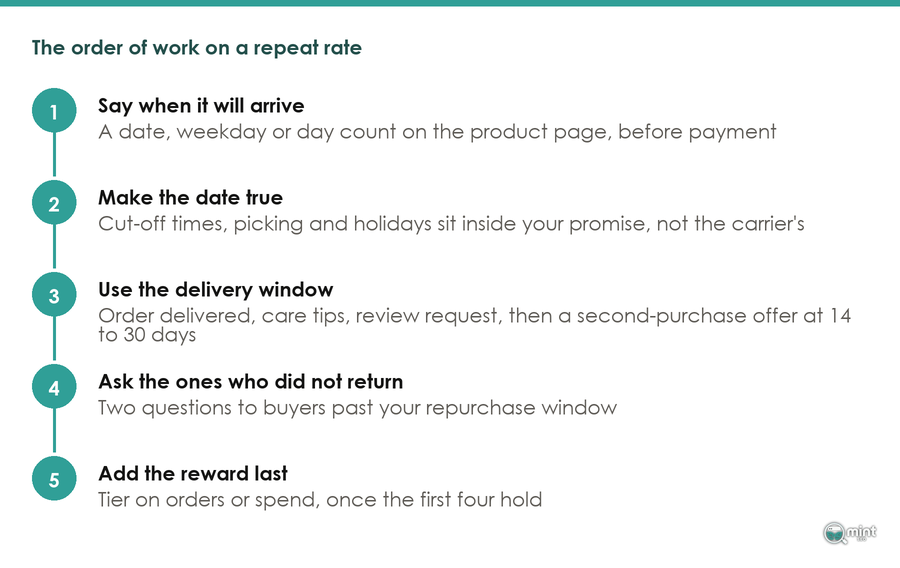
A second order is mostly decided by the first one. Customer retention in ecommerce starts with a first purchase that matched its product page and turned up when promised. A reminder timed to when the product runs low or proves itself comes next, and a loyalty scheme only after that.
Starting at the other end, with a points app or a discount code, gets the order backwards. That offer lands while the first parcel is running late or the jumper has come up a size small.
The first thing I’d check is your own order export, read product by product. A store-wide repeat purchase rate blends the products that bring buyers back with the ones that never do, so it hides both. Each product’s usual wait between first and second order then tells you when its reminder should go out.
The Second Order Is Earned By A First Order That Matches The Product Page
A customer who never comes back has usually decided long before a second order was on the cards. Customer loyalty for an online store is built or lost on the first delivery, when a new buyer compares what turned up with what the product page promised.
Two of those promises decide whether a first-time buyer becomes a repeat customer: the delivery date and the fit.
Put The Delivery Date Where The Buyer Decides
A delivery date that turns out wrong does more damage than a slow one. Savanta surveyed 1,022 UK shoppers for the delivery platform Ingrid in March 2026. Of those shoppers, 70% said a broken delivery promise would make them question their loyalty to a brand, and around half would not buy from that brand again.
So the retention fix is a date the buyer sees on the product page and again in the cart, set to what your warehouse can manage on a bad week. Delivery cost, timing and returns belong where the buying decision happens. It's worth checking what the checkout shows about delivery as well, since a surprise there follows the customer to their next visit.
Settle Fit And Returns Before Anyone Has To Send It Back
For clothing, shoes and anything sized, whether a customer buys again is decided by whether the first one fitted. A buyer who had to send something back rarely gives the store another go.
Most of the fix sits on the page. Give measurements for every size and a plain note when a style runs small, with photos on more than one body shape.
When something does go back, refund it quickly, because a fast refund is often what decides whether that customer tries you again. In a UK survey reported in July 2026, 67% of adults said a quick refund would make them more inclined to return to the same retailer.
Time Each Repeat-Purchase Reminder To How The Product Gets Used
Good timing is where most repeat orders are won after the sale, because customer retention in ecommerce depends on a follow-up reaching people when they are ready to buy again. That moment changes with the product, and before setting a single reminder a store needs to know which products bring buyers back and how long they take.
Find Out Which First Purchases Bring Customers Back
Start with your own orders. Export them and, for every customer who bought twice, line up the first product against the second product and the days in between.
On Shopify you can get most of the way without a spreadsheet. Its Customer cohort analysis report groups customers by the month of their first order, lets you switch the metric to retention rate or sales, and filters the cohorts by the product in that first order.
Some products bring a good share of buyers back within weeks while others almost never lead to a second order. A store-wide repeat purchase rate averages the two and describes neither, so read it per product, alongside the ecommerce metrics worth tracking.
Each product's typical wait between first and second order becomes the date its reminder goes out, which is what I mean by data-led decisions. Buyers who never ticked the marketing box can't be reached by email at all. They are a job for their next visit to the site.
Before you trust any win-back campaign, hold back a group that gets nothing. Without it, the orders that would have come anyway get credited to the email.
Remind Customers Before A Consumable Runs Out
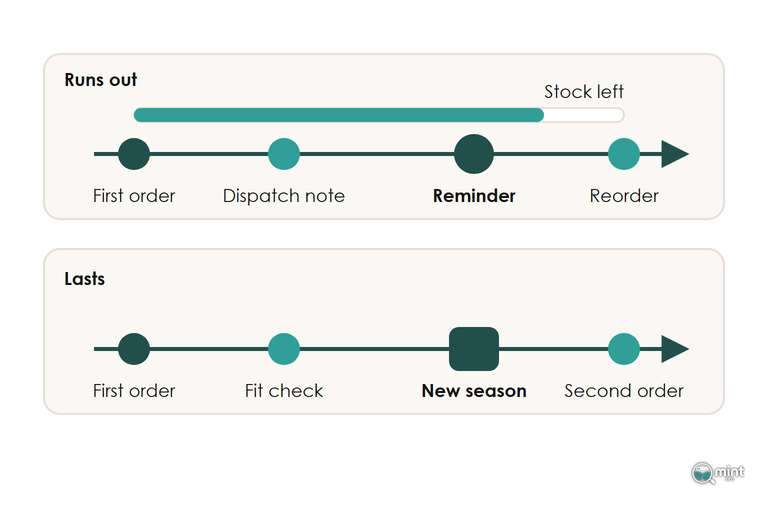
Coffee and pet food run out on a clock. Your reminder should land while there is still some left, somewhere around two-thirds to four-fifths of the way through the product's life, when reordering feels like topping up.
Tell the buyer it's coming. A line in the dispatch email saying the bag lasts about a month and you'll be in touch in three weeks means nobody is surprised when it lands.
If you send through Klaviyo, its guidance is to give each product its own timing with a separate flow for each replenishment cycle. It also warns that one sequence counting down to every order drives unsubscribes. Its predicted next-order date only shows up when 500 or more customers have bought from the store.
Someone who bought three bags needs a later reminder than someone who bought one, and a gift order needs none at all, because the buyer may never use the product.
A subscription can carry that timing for you. At Heart & Graft's subscriptions page, a coffee roaster on North Street in Manchester asks each subscriber to pick the frequency, so the next bag lands when theirs runs out. It also keeps step-by-step brewing guides on its own site, which gives a customer a reason to visit between bags.
If you offer a subscription, make skipping and pausing one click. People cancel what feels like a trap, and the UK's new subscription rules, which the government brought forward to January 2027, require written reminder notices and an easy way out.
Give Products That Last A Different Reason To Return
A jacket or a pair of boots never runs out. Their second order comes from a season changing, a birthday, a size moving on or the item that goes with the first one.
Send help before you send an offer.
A care guide in the first week gives you a reason to be in their inbox. A short check about a week after delivery asking whether it fitted gives you another. The replies also show you where your sizing copy is wrong.
After that, tie the ask to a date that means something to them, such as a new season's range or a gift occasion. Put a one-click reorder link in that email with their details saved, because many second orders are lost to the number of steps it takes.
Keeping each buyer's history in one place lets you time all of this, and it's the main argument for a CRM that holds the order history.
Add A Loyalty Programme Once Customers Already Come Back
Reward Returning Buyers With Perks Instead Of Deeper Discounts
Reward returning customers with things they value that don't teach them to wait for a code. Early access to new stock, offers only subscribers see and free delivery all do that job.
Free delivery is the perk I'd try first, because delivery cost is where a returning buyer still hesitates.
Picture a bag of coffee that lasts five weeks and a money-off code sent on day seven. The buyer learns that the code comes round again and starts waiting for it. Plenty of brands spent 2026 giving returning buyers smaller discounts for that reason.
A returning buyer still needs a reason to order today. That is urgency, and it's a separate lever from discounting. I'm a big fan of it for repeat customers: a monthly box that closes on the 20th or a seasonal blend that won't be roasted again moves them now, at full price.
Perks also give you a reason to ask returning buyers to review what they bought once it has had time to prove itself. Shown as reviews on the product page, they add unique text that helps those pages rank as well as sell.
Pay Referral Rewards Only On A Confirmed Order
Pay a referral reward when the friend's order is confirmed, never at signup. A reward paid at signup pays for people who never buy.
Points suit products people reorder anyway. In Manchester, the brewery behind the Cloudie Club rewards scheme gives points on every order and for referring friends, on beer that subscribers to its monthly beer club are buying anyway.
Referrals do better for stores where people buy once, such as furniture or a one-off gift, because a happy customer's next purchase is often a friend's first.
Know your repeat purchase rate and the revenue those repeat orders bring in before adding either, then compare both afterwards. Revenue is the number that tells you whether a scheme paid for itself.
Go Through Your Repeat-Customer Numbers With Your Own Reports
If your first orders are healthy and your second ones aren’t, the cause usually shows up in the order export long before it shows up as a missing app. Check which products bring buyers back and where the first delivery lets them down.
Good customer retention in ecommerce leans on the same product pages that win searches. Getting them to rank, with copy that sets honest expectations, is what our ecommerce SEO services for stores whose customers come back cover.
To see which searches already reach those pages, get a free SEO audit of your store. It lists your top keywords with their positions and shows how much of your search traffic comes from people who already know your brand name. You’ll get the two-page PDF the same day, with no call and nothing to pay.

About the author
John Butterworth
John Butterworth is the founder of Mint SEO, a Manchester ecommerce SEO agency he started in 2024. He has 11 years in SEO and digital marketing, previously running SEO departments for market-leading brands and several agencies. He specialises in Shopify and ecommerce SEO, and his work has ranked over 100 websites and driven more than 3 million organic visits. He speaks at industry events including the SEO Mastery Summit.
Connect on LinkedIn →