
What Ecommerce SEO Gets Your Store (And How To Tell It Is Paying)
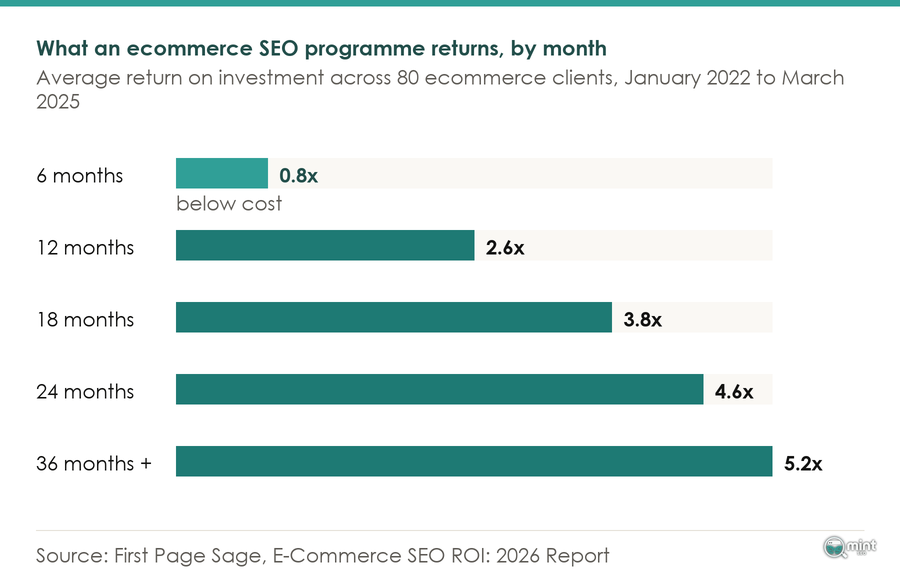
Search ‘running shoes’ on Google and look at the first page. Mostly ecommerce shops. The same is true for ‘ceramic plant pots’, ‘dog harness’, and…
 John Butterworth
Search ‘running shoes’ on Google and look at the first page. Mostly ecommerce shops. The same is true for ‘ceramic plant pots’, ‘dog harness’, and…
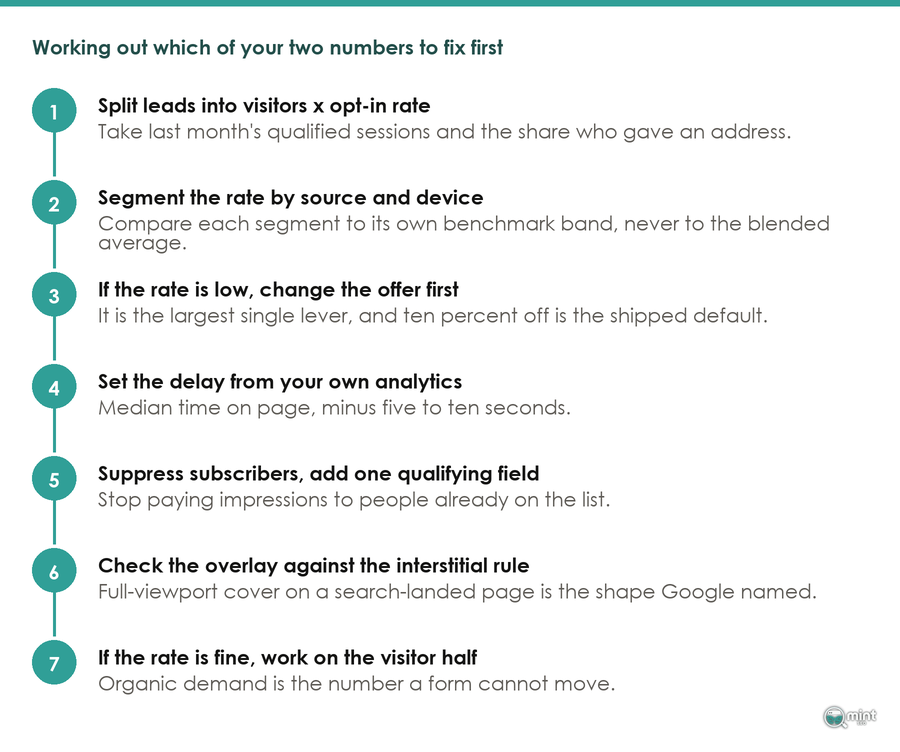
On a store, ecommerce lead generation means getting a shopper to leave an email address or a phone number before they go, even when they don’t buy. It pays when you ask straight after the shopper shows interest, with an offer small enough to protect your margin. The clearest of those moments is a sold-out … Read more
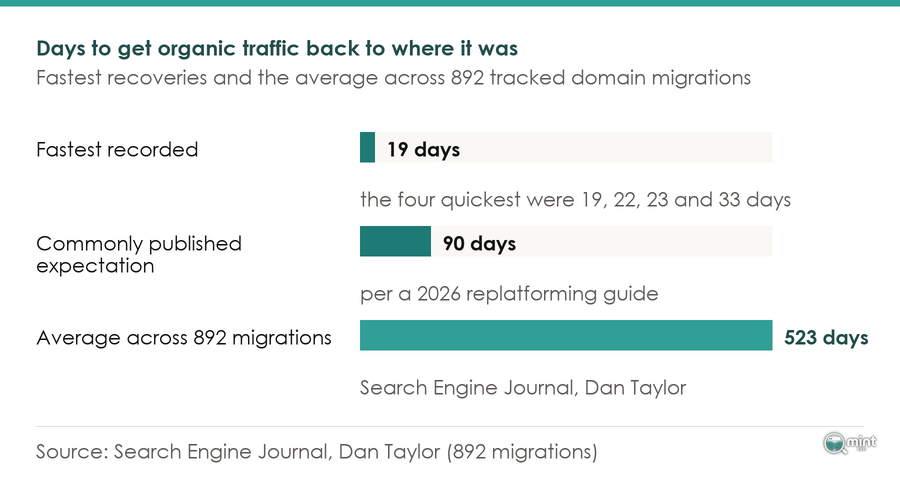
Read each ecommerce migration case study next to the others and one difference decides it: what else changed on launch day. On Sistrix’s visibility index and the stores’ own reports, the moves that kept or won back their traffic changed only the addresses, plus the platform in one case. Each store that lost out made … Read more
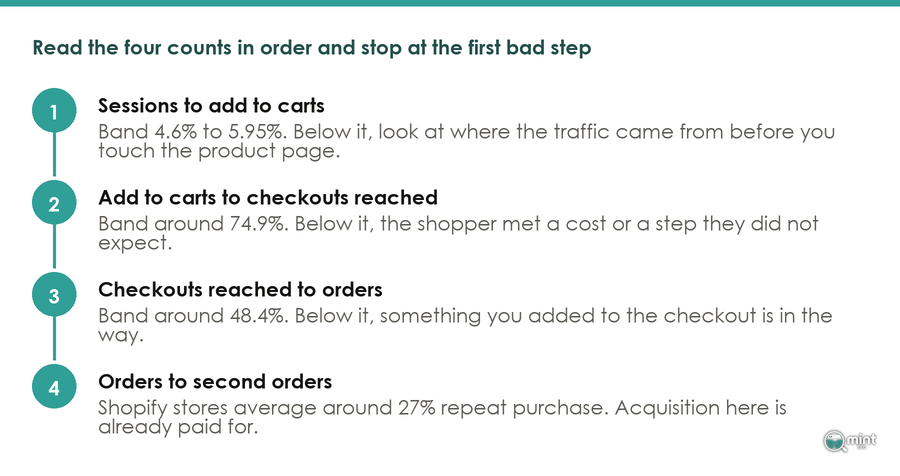
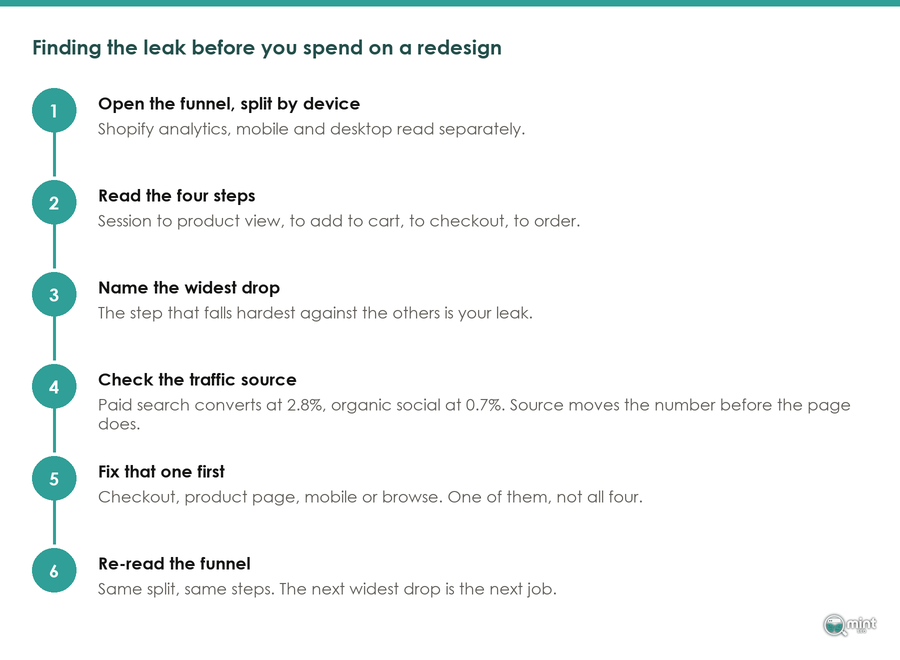
A sale on your store passes four stages: a visit, an add to cart, a started checkout and a payment. Together they make up your ecommerce funnel, and each stage keeps fewer shoppers than the one before it. Shopify’s conversion report already counts all four, but it divides every step by all sessions. I’d divide … Read more
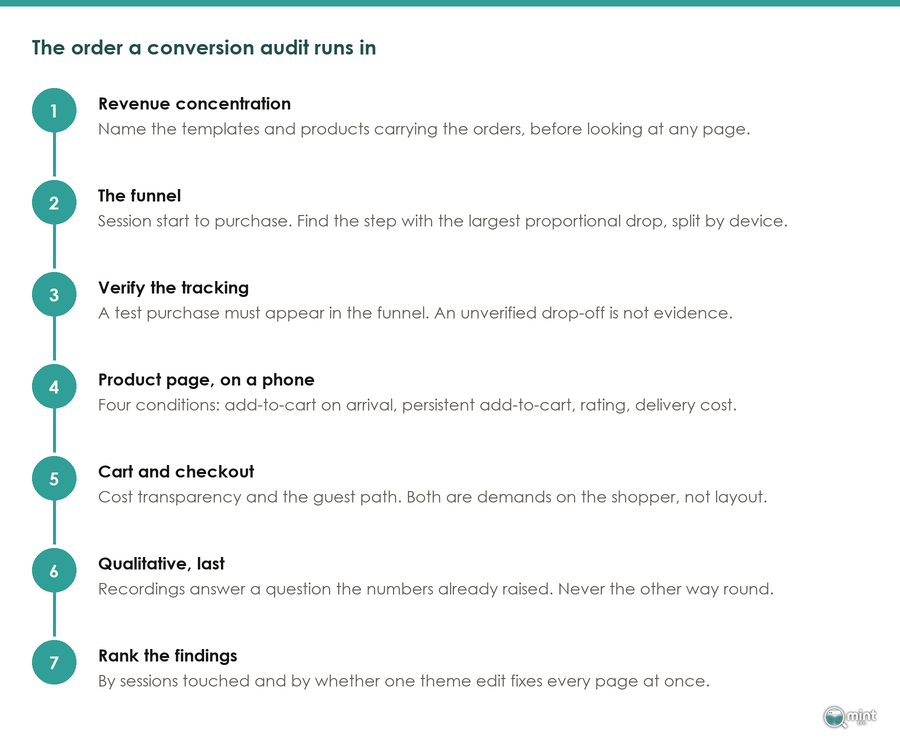
Start an ecommerce CRO audit from the orders that never came, and work back one stage of the funnel at a time. Stop at the single step that fails its check, and only then open the page behind it. When that step is the checkout, the faults I've found include no express checkout, too many … Read more
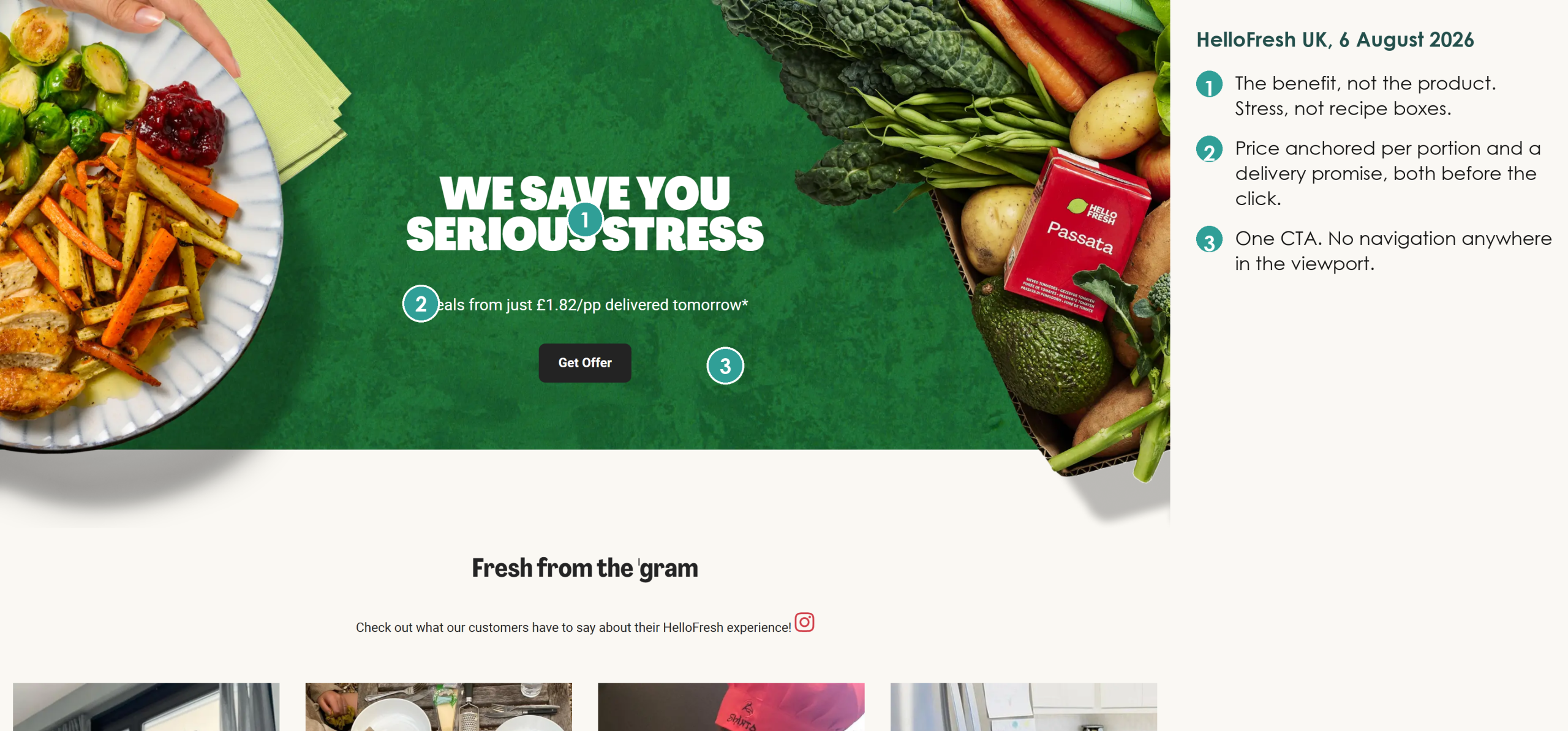
An ecommerce landing page is wherever a shopper lands after clicking an ad, an email or a Google result. Its job is to turn that one visit into one order. What goes on it depends on what the shopper was promised before the click. A sale ad needs the discount and a button up front, … Read more
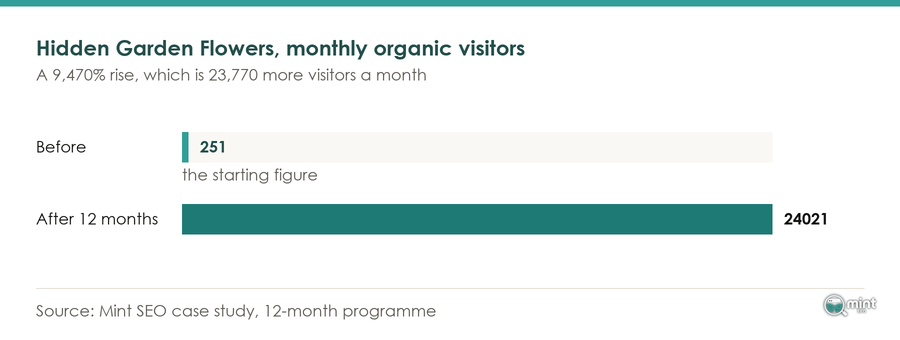
A useful ecommerce SEO case study shows where the store started and what was changed. It gives the dates and says where each figure comes from. Dates matter because an improvement often shows only when the next Google core update re-scores the site. Check the source of each number too. A traffic estimate from an … Read more
Most ecommerce UX problems are invisible to the people who own the shop. You log into your Shopify admin, browse the front end, click through…
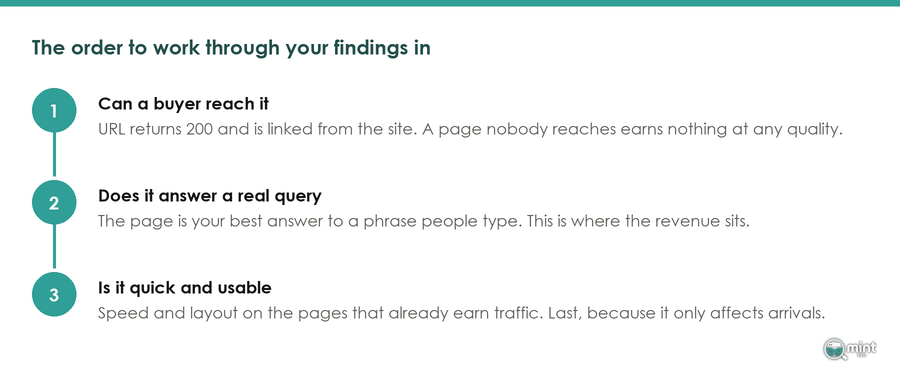
Most ecommerce sites lose organic traffic not because Google penalises them, but because nobody has ever checked whether the basics are in place. An ecommerce…
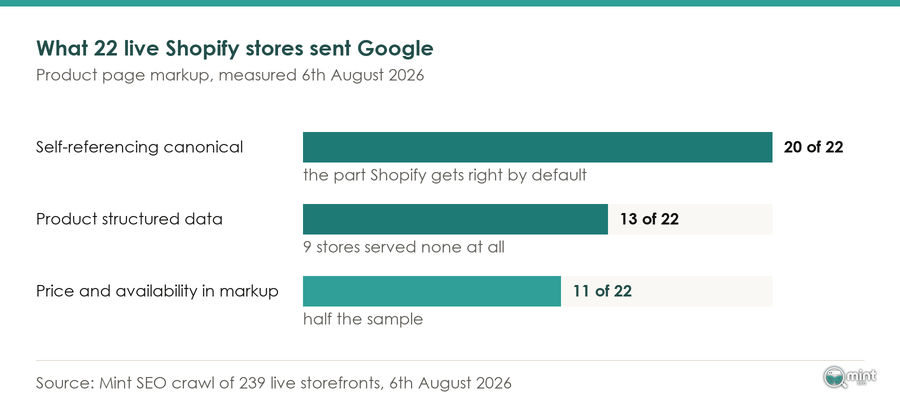
For most stores that want organic search to pay its way, Shopify is the best ecommerce SEO platform. It handles the storefront code and keeps pages quick without a developer on hand. WooCommerce sits close behind, as long as someone on your team looks after its hosting and add-ons. Wix and Squarespace trail both. Before … Read more